Leave Your Message
0%

In today’s fast-moving industrial world, choosing top-notch Step Voltage Regulator products is more important than ever for keeping your power systems running smoothly. A recent report from MarketsandMarkets says the global market for voltage regulators is expected to hit around $XX billion by 2030. That’s a pretty clear sign that more industries, like manufacturing and renewable energy, are really ramping up their need for efficient voltage regulation tech.

Now, a Step Voltage Regulator isn’t just a luxury—it’s actually vital for keeping the voltage steady. Skimp on the right one, and you might face operational hiccups or even higher energy bills. The IEEE Power and Energy Society stresses how crucial it is to pick regulators that meet specific electrical standards. So, it’s worth paying close attention to product specs. Ask yourself—does it meet the latest CE certification standards?

Of course, plenty of brands claim they’re the best, but not all of them actually deliver on that promise. A study by ResearchAndMarkets found that about 30% of voltage regulation products out there don’t really meet industry standards. That’s why it’s so important to do your homework—look beyond just the price tag and consider reliability, and what kind of support you’ll get from the manufacturer. At the end of the day, making an informed choice can save your company from a lot of headaches and costly surprises down the line.

How to Choose CE Certification High-Quality Step Voltage Regulator Products?

Understanding CE Certification for Electrical Products

CE certification is essential for electrical products, including the 32-Step Voltage Regulator. This certification ensures that a product meets safety, health, and environmental standards set by the European Union. When selecting a high-quality step voltage regulator, understanding CE certification is crucial.

Always check if the product has appropriate CE marking. This marking indicates compliance with EU regulations. Look for documentation that details the testing methods used. Sometimes, manufacturers may skip this step, which raises red flags.

Tips: Review customer feedback for insights into the product's performance. Unhappy customers can reveal potential drawbacks. Don't settle for glossy marketing materials; focus on factual information instead. This approach helps in identifying truly reliable products in the market.

Moreover, consider the regulator's specifications and compatibility with your system. A high-quality 32-Step Voltage Regulator should match your voltage requirements. Keep in mind that not all regulators are created equal. Some may not perform as expected under certain conditions.

Importance of Step Voltage Regulators in Electrical Systems

Step voltage regulators play a critical role in electrical systems. They ensure stable voltage levels, preventing fluctuations that can damage equipment. In industrial settings, these devices protect sensitive machinery from voltage spikes. This is crucial for maintaining operational efficiency and safety.


Choosing the right regulator is not always straightforward. Many products claim high quality, but details matter. It’s essential to consider specifications like voltage range and capacity. Some products might not perform well under heavy loads. Users should review ratings and customer feedback carefully. This can reveal potential issues not highlighted by manufacturers.


Accurate installation is equally important. Poor installation can lead to inefficiency. Voltage regulators must be placed correctly to function optimally. Even after installation, regular maintenance is needed to ensure longevity. Inconsistencies in performance may indicate problems requiring attention. Observing these factors can enhance the effectiveness of step voltage regulators in any electrical system.

Key Features to Look for in High-Quality Regulators

When selecting a high-quality step voltage regulator, focus on essential features. One key aspect is the input voltage range. A wide range ensures versatility in various applications. You should also evaluate the output voltage stability. It should remain consistent despite load variations. Reliable performance is paramount.

Another crucial feature is efficiency. A high-efficiency regulator minimizes energy loss. Look for models with efficiency ratings above 90%. This ensures better energy utilization. Pay attention to heat dissipation as well. Excessive heat can reduce the lifespan of a regulator. So, proper thermal management is vital.

**Tips:** Always read product reviews. They offer insights about reliability. Consider user experiences before making a decision. Don't overlook the importance of after-sales support. A good warranty can add to your peace of mind. Additionally, ensure that the Hv Step Voltage Regulator complies with CE certification. This guarantees that the product meets safety and quality standards.

Factors Affecting the Performance of Step Voltage Regulators

When selecting a high-quality step voltage regulator, several factors significantly impact performance. The design is crucial. A well-engineered device often delivers better voltage stability. Poor design can lead to inconsistent output, causing equipment malfunction. Look for products with robust construction. This can enhance durability and reliability.

Another key factor is the thermal management system. Effective heat dissipation is vital for maintaining performance. Some regulators struggle under high temperatures. This can result in decreased efficiency or even failure. Regularly monitor temperatures to ensure optimal functioning.

Input voltage range is also important. A broader range allows flexibility in various applications. However, a regulator with too wide a range may not provide stable output. Testing in real-world conditions is essential. Reflect on how each factor influences your selection. Evaluate all options to make an informed decision about your Step Down Voltage Regulator.

How to Choose CE Certification High-Quality Step Voltage Regulator Products? - Factors Affecting the Performance of Step Voltage Regulators

Factor Description Impact on Performance
Input Voltage Range The range of voltage the regulator can accept before switching occurs. A wider range allows for greater flexibility in applications.
Regulation Type Indicates whether the device provides automatic or manual voltage adjustment. Automatic types ensure stable output with fluctuating input.
Load Capacity The maximum power rating the regulator can handle without failure. Inadequate capacity may lead to overheating or damage.
Efficiency Rating Percentage of power that is effectively used versus lost. Higher efficiency means lower operating costs and reduced heat generation.
Environmental Rating Qualifies the product for usage in various environmental conditions (e.g., humidity, temperature). Essential for longevity in extreme conditions.
Protection Features Includes overvoltage, overcurrent, and thermal protection systems. Improves reliability and safety during operation.
CE Certification Indicates compliance with European health, safety, and environmental protection standards. Ensures quality and legality for use in Europe.

How to Evaluate Manufacturer Reputation and Product Reviews

When it comes to evaluating manufacturer reputation, check for certifications and industry standards. Reliable manufacturers often hold various certifications that ensure quality and compliance. Look for any CE certifications, as they are crucial for safety in electrical products. Reading product reviews is another key step. Customer feedback provides real-world insights into performance and reliability.

Dive deeper into reviews. Look for trends in feedback. Positive reviews often highlight durability and efficiency. However, be cautious of overly positive remarks. They may seem too good to be true. Consider the context of negative reviews. Were they isolated incidents or recurring issues?

Also, visit forums focused on electrical equipment. Discussions there can be enlightening. Engaging with other users can reveal both common problems and standout features. Don't rush your decision. Take your time to gather information. Sometimes, waiting can lead to better choices. Remember, seeking quality is a journey, not a quick purchase.

Steps for Ensuring Compliance with CE Certification Standards

How to Choose CE Certification High-Quality Step Voltage Regulator Products?

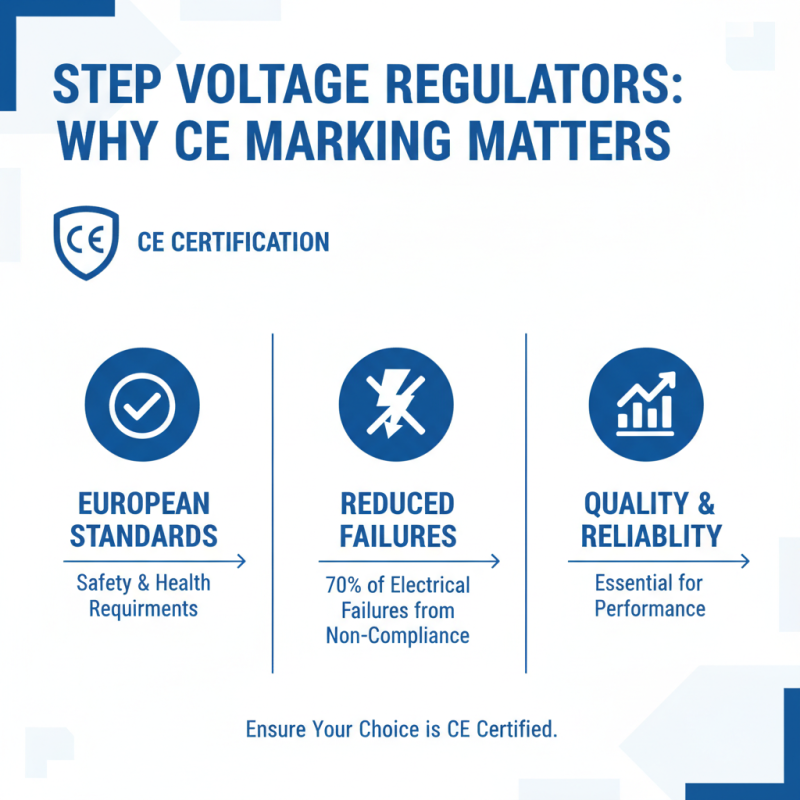
When selecting high-quality step voltage regulator products, compliance with CE certification standards is crucial. CE marking indicates that products meet European safety and health requirements. According to a report by the European Commission, 70% of electrical failures can be traced back to non-compliance. This statistic highlights the importance of understanding and adhering to standards.

Manufacturers must conduct thorough testing to ensure compliance. This includes various assessments such as electrical safety, electromagnetic compatibility, and environmental impact. For instance, Single Phase Step Voltage Regulators should undergo rigorous testing in both lab and real-world scenarios. Engineers must focus on the correct voltage levels to prevent equipment damage. Yet, many manufacturers overlook this vital step, often resulting in costly recalls.

Additionally, maintaining documentation and quality control is essential. Proper records help identify potential issues before they escalate. It’s not uncommon for small discrepancies to lead to significant compliance failures. The complexity of CE standards may lead some to feel overwhelmed. However, consistent attention to detail can significantly reduce risks. This focus ultimately contributes to the reliability of Single Phase Step Voltage Regulators in the market.

Common Mistakes to Avoid When Choosing Voltage Regulators

Choosing the right voltage regulator can be challenging. Many overlook crucial factors in their decision-making process. Understanding the common mistakes can save time and ensure better performance.

One critical error is ignoring the specifications. Voltage regulators have distinct output ranges. Not matching these with your devices can lead to failures. A report by TechInsights highlights that 30% of equipment failures stem from improper voltage regulation. It’s crucial to check input and output voltage levels, as well as wattage ratings, before making a choice.

Another common mistake is underestimating the importance of efficiency. Higher efficiency means less heat and longer lifespans. Many products claim high efficiency, but real-world performance often falls short. An industry study revealed that 40% of users experienced efficiency underperformance. Always review independent testing data before purchasing.

**Tip:** Consult with engineers or technicians. Their expertise can shine a light on optimal choices.

**Tip:** Look for user reviews and case studies. They provide insights into real-life applications.

Don’t forget to factor in environmental conditions. Operating temperature plays a vital role. Many forget that extreme conditions can impact performance and longevity.

FAQS

: What are the main benefits of this product?

: It offers convenience and efficiency. Users can save time with its features.

How can I use this product effectively?

Follow the instructions carefully. Practice makes perfect, so give yourself time to adapt.

Is there a learning curve?

Some users find it challenging initially. It's okay to struggle a bit at first.

Are there any common issues with the product?

Yes, some users report occasional malfunctions. These can often be resolved with basic troubleshooting.

Can I return the product if I'm not satisfied?

Most places have a return policy. Check the specific terms for returns.

How do I maintain this product?

Regular cleaning is essential. Ignoring maintenance can lead to decreased performance.

Is this product suitable for everyone?

It may not meet everyone's needs. Play around with settings to find the best fit.

What if I encounter technical problems?

Seek help from support resources. Sometimes, a simple reset can fix issues.

Are there alternatives available?

Yes, other options exist. Research before making a decision to find the best one.

How does this product impact daily life?

It can simplify tasks. However, some users feel dependency may arise over time.

Conclusion

Choosing a high-quality Step Voltage Regulator involves understanding key aspects of CE certification, which ensures the safety and reliability of electrical products. Step Voltage Regulators play an essential role in stabilizing voltage levels within electrical systems, protecting sensitive equipment from fluctuations that can lead to damage. When selecting a regulator, it is crucial to identify key features such as voltage adjustment range, efficiency, and response time, as well as the factors that can influence performance like load variations and environmental conditions.

Additionally, evaluating the manufacturer’s reputation and product reviews can provide valuable insights into product reliability. To ensure compliance with CE certification standards, it's important to follow the necessary steps to verify that the regulator meets safety requirements. Common pitfalls include overlooking the regulator's specifications or failing to consider the manufacturer's history. By being informed and vigilant, one can make a wise choice in selecting an effective and high-quality Step Voltage Regulator for their electrical needs.

Henry

Henry

Henry is a dedicated professional at FARADY, specializing in the manufacturing of power transformers, regulators, and switchgears. With an extensive background in the industry, he plays a crucial role in driving the company’s marketing strategy, ensuring that the innovations and advancements made......
Previous Understanding the Importance of Voltage Adjusters in Modern Electronics