In the world of electrical engineering, the 'Earthing Transformer' is pretty important. Dr. Emily Johnson, who’s an expert over at Power Solutions Inc., points out that, “Earthing Transformers are really key for keeping systems stable and safe.” Basically, this technology connects ungrounded systems to the ground, which helps protect against electrical faults.
Having an Earthing Transformer boosts safety because it gives fault currents a low-resistance path to go through. This means less chance of damage to equipment and fewer electrical shocks. That said, it's not always a one-size-fits-all situation. Sometimes, installing these can cause unexpected grounding issues, so it’s crucial to do a proper assessment first.
Also, it’s important to understand the different types out there. For example, delta-wye transformers come with their own set of advantages in certain setups, but using them correctly takes some careful thought. The whole process can be pretty complex—even for experienced engineers. All in all, an Earthing Transformer can be a major asset, but it definitely requires good planning and know-how to get it right.
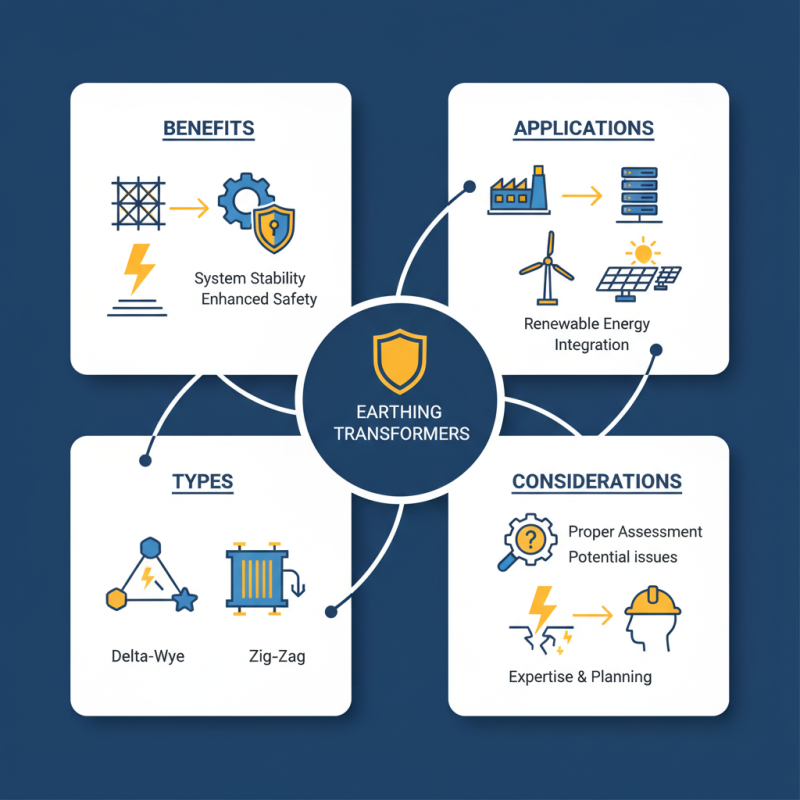
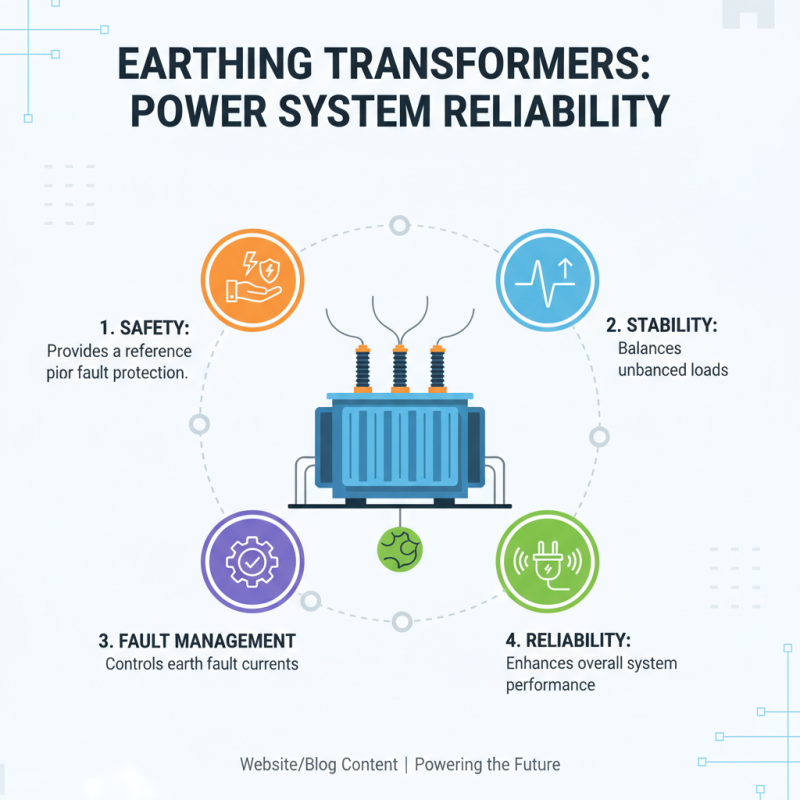
Earthing transformers play a crucial role in electrical systems. They provide a reference point for the electrical network and help in safety and stability. With the right earthing transformer, faults can be managed more effectively. This enhances the overall reliability of the power system.
These transformers help to manage transient voltages during faults. They can also limit the potential rise of equipment during fault conditions. By grounding the system correctly, the risk of electrical shock is significantly reduced. This is crucial in protecting both equipment and personnel.
However, choosing the right type of earthing transformer can be challenging. Each system has unique requirements. There’s a need for careful analysis to avoid potential failures. Ignoring this can lead to severe consequences. The complexities of electrical networks require ongoing attention and adaptation.
Earthing transformers play a critical role in electrical systems. They help prevent overvoltages during fault conditions. By grounding the neutral point, these transformers provide a safe path for fault currents. This reduces the risk of equipment damage and ensures safety for personnel.
In a typical electrical setup, faults can lead to dangerous situations. An ungrounded system can cause unpredictable voltage spikes. Earthing transformers mitigate these risks effectively. They are essential in ensuring system stability and reliable operation. Without them, equipment can malfunction or fail, causing costly repairs and downtime.
It’s noteworthy that not all installations utilize earthing transformers. Some systems rely solely on grounded systems or resistive grounding. This can lead to oversight in safety protocols. The choice of earth grounding strategy is crucial. Engineers must evaluate their specific needs and risks associated with each option. Balancing safety and efficiency isn't always straightforward.
Earthing transformers play a crucial role in electrical systems. They help stabilize the voltage and provide a path for fault currents to flow safely to the ground. Understanding the different types of earthing transformers can enhance their application in various settings.
One common type is the star-connected earthing transformer. It connects the neutral point of the transformer to the ground. This method offers impedance grounding, which limits the fault current. It is ideal for industrial applications where equipment protection is vital. Another type is the delta-connected earthing transformer. It is suitable for transformers that do not have a neutral point. This type helps in reducing harmonics and improving power quality.
Tips: Always assess system requirements before choosing an earthing transformer. Different installations may need different types. Consult with experts to identify the best option for your needs. Ensure that regular maintenance checks are performed for long-lasting performance. Implementing the right procedures can drastically impact safety and reliability in your electrical setup.
Earthing transformers play a crucial role in power distribution systems. They provide a safe path for fault currents. This helps protect equipment from damage. By improving safety, they reduce the risk of electrical shock. In industrial settings, these transformers are essential. They ensure reliability and stability in operations.
One primary benefit of earthing transformers is their ability to manage unbalanced loads. This is particularly important in systems with high variability. Many facilities experience fluctuating power demands. Earthing transformers help mitigate these issues and maintain voltage stability. Additionally, they enhance system grounding, which can minimize transient overvoltages and improve protection.
However, not all applications benefit equally from earthing transformers. In some scenarios, their installation can be complex and costly. Additionally, maintenance is essential but often overlooked. Neglecting proper care can lead to failures. Thus, it is vital to weigh the benefits against potential challenges. Understanding the specific needs of a power distribution system is key to making informed decisions.
| Dimension | Description |
|---|---|
| Increased Safety | Mitigates the impact of ground faults and protects equipment and personnel. |
| Voltage Stabilization | Helps maintain stable voltage levels in the distribution network. |
| Equipment Protection | Protects transformers and electrical devices from damage due to over-voltages. |
| Types of Applications | Used in industrial plants, commercial buildings, and renewable energy systems. |
| Types of Earthing Transformers | Includes Zigzag, Delta, and Star configurations based on application needs. |
| Cost Efficiency | Reduces the financial impact of outages and equipment failures. |
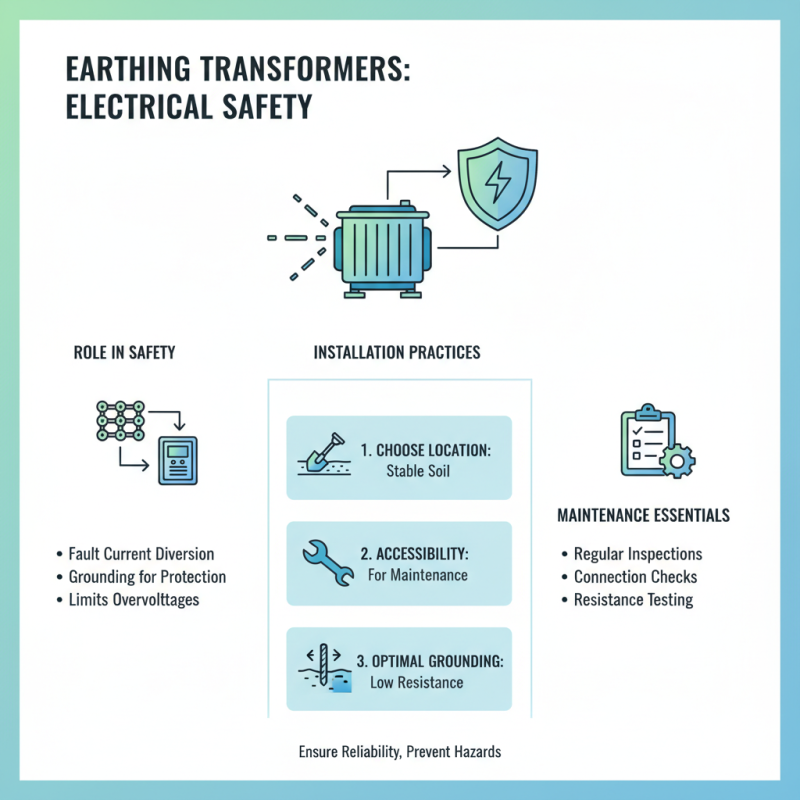
Earthing transformers play a vital role in ensuring electrical safety. Proper installation and maintenance practices are essential for their effectiveness. When installing an earthing transformer, the first step is to choose an appropriate location. This site should have stable soil conditions for optimal grounding. Additionally, accessibility for maintenance is crucial.
During installation, ensure that all connections are tight. Loose connections can lead to voltage fluctuations. It’s important to follow the manufacturer's guidelines closely. Tip: Keep a checklist handy. It helps in avoiding mistakes during setup. Regular inspections are equally vital. Check for wear and tear in cables and connectors. Signs of corrosion should not be ignored.
As for maintenance, cleaning is key. Dust and debris can obstruct performance. Schedule routine checks every few months. Remember to test grounding resistance periodically. If it shows significant changes, further investigation is necessary. Tip: Use a moisture meter to prevent corrosion. Document all maintenance activities. This is important for future reference. Don’t overlook small details; they can save you money and time in the long run.
Earthing transformers play a crucial role in electrical systems. However, their design comes with challenges. A primary concern is their size and weight. Many installations have limited space. This limits options and can lead to increased costs. Engineers must creatively adapt designs to fit compact spaces.
Safety is another critical issue. An earthing transformer must earth the system effectively. Failure in design can lead to dangerous conditions. For example, uneven ground can affect performance. According to a recent report, improper earthing accounts for nearly 30% of electrical faults. This highlights the need for careful planning and execution.
Tip: Always conduct a soil resistivity test. It provides valuable data for effective earthing. Additionally, consider future expansions. Design flexibility can save costs later.
Maintenance is essential for optimal functionality. Many transformers are neglected over time. Regular inspections can reveal wear or damage. They ensure the transformer operates reliably.
Tip: Implement a schedule for routine checks. This proactive approach prevents major issues. An ounce of prevention is worth a pound of cure.
Earthing transformers play a vital role in electrical systems. The future of earthing transformer technology is geared toward innovation. Emerging trends focus on improving efficiency and safety. Modern transformers may include smart features for real-time monitoring. This allows for quick responses to faults and issues.
Another trend is the use of environmentally friendly materials. They aim to reduce the carbon footprint. Some manufacturers are exploring advanced insulation systems. These innovations enhance performance and reliability. However, cost implications might arise, forcing discussions in energy budgeting.
Tips: Regular maintenance of earthing transformers is crucial. Check connections frequently to avoid failures. Another tip is to stay updated on industry innovations. This helps in making informed decisions about upgrades. The ongoing evolution in technology is interesting, yet it raises questions about sustainability in design and implementation. Continuous improvement is needed, but it requires critical evaluation.
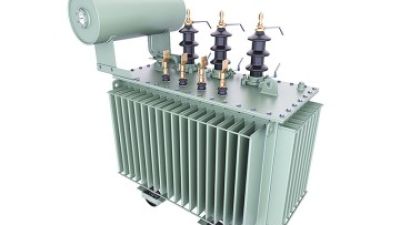
Three phase oil immersed distribution transformers are essential components in modern electrical systems, designed to efficiently manage power distribution across various applications. The S13 model series of these transformers operates within a rated voltage range of 2.5 to 40.5 kV, meeting essential industry standards outlined in IEC 60076-1 and EN 50588-1. Their robust design allows for effective performance in both indoor and outdoor settings, adapting seamlessly to diverse environmental conditions.
One of the key advantages of oil immersed transformers is their ability to provide reliable insulation and cooling, thanks to the oil that surrounds the internal components. This feature not only enhances operational efficiency but also contributes to the longevity of the equipment, which comes with a two-year warranty for added assurance. The durability and adaptability of these transformers make them ideal for a wide range of applications, including power substations and industrial facilities, ensuring optimal performance in power distribution networks while minimizing maintenance needs.
: The articles discuss various aspects of health and wellness.
Yes, several diets are outlined, advocating balanced nutrition and moderation.
Exercise is crucial. It enhances both physical and mental health.
Staying hydrated is essential for optimal body function and energy levels.
Yes, practices like mindfulness and regular breaks are recommended for stress relief.
Mental health is highlighted as equally important as physical health.
Tracking progress is encouraged. It helps maintain motivation and accountability.
Yes, personal circumstances can affect adherence to health recommendations.
Balance comes from setting realistic goals and avoiding extremes in diet or exercise.
Yes, community can provide encouragement and shared experiences in health journeys.
Earthing transformers play a crucial role in electrical systems by providing a stable reference point for grounding, thereby enhancing safety and equipment protection. This article outlines the significance of earthing transformers, detailing their various types and applications, particularly in power distribution networks. The benefits of utilizing earthing transformers include improved voltage stability, fault detection, and reduced equipment damage, making them essential for reliable electrical operation.
Furthermore, the installation and maintenance practices for earthing transformers are highlighted, emphasizing the need for proper care to ensure optimal performance. Challenges in design and practical considerations also come into play, alongside future trends and innovations that may shape the evolution of earthing transformer technology. Overall, understanding these aspects aids in ensuring safe and efficient electrical systems.